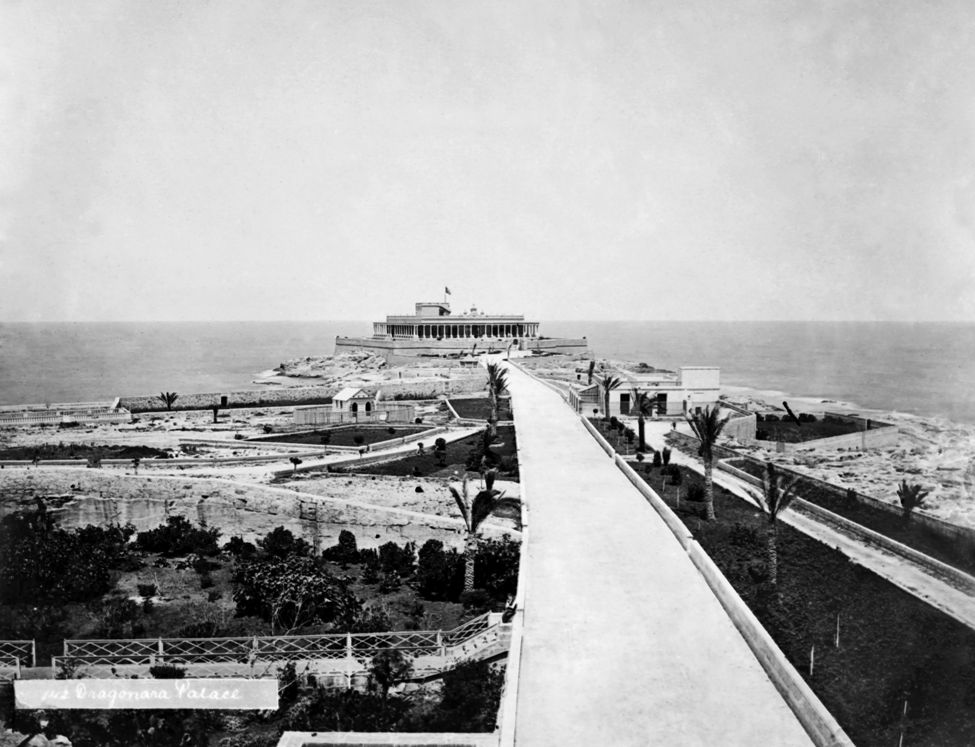
1868 – 1875
Bare rock at Tad-Dragun
In the late 1860s Emmanuele Scicluna turned his attention to the up-and-coming coast of Sliema and St Julian’s. The tip of the Tad-Dragun promontory was strategically placed: visible along the entire Sliema shoreline and from every ship entering the Grand Harbour on that side.
A Government survey of February 1868 marks out the “site of naked rock” he had applied for: 18,277 square yards, valued at £87 10s. The purchase was signed on 20 August 1868; a further 11,570 square yards followed a year later. In all, at least thirteen contracts between 1868 and 1875 pieced the estate together — and building began in 1870, before all of it was his.
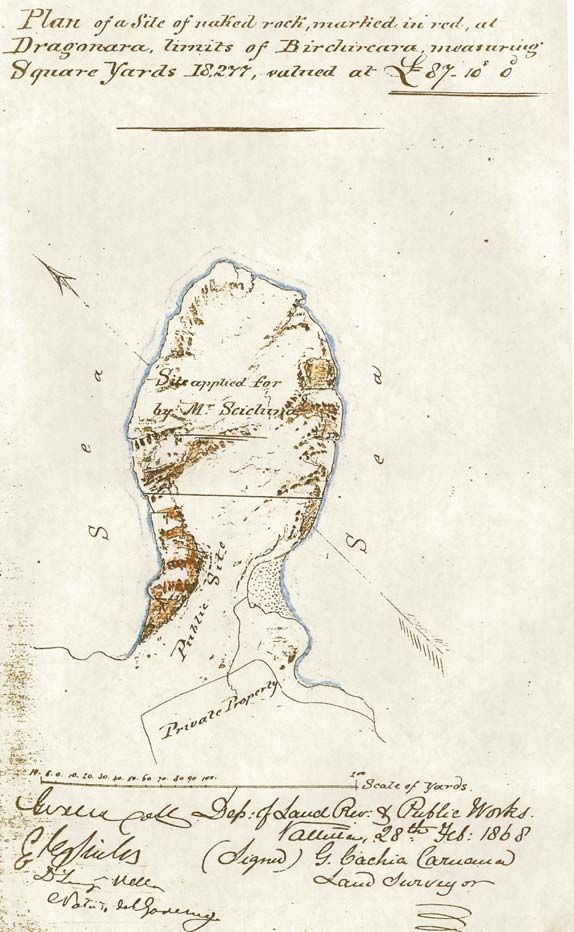
Survey of the land by architect Giuseppe Antonio Cachia Caruana, 1868.
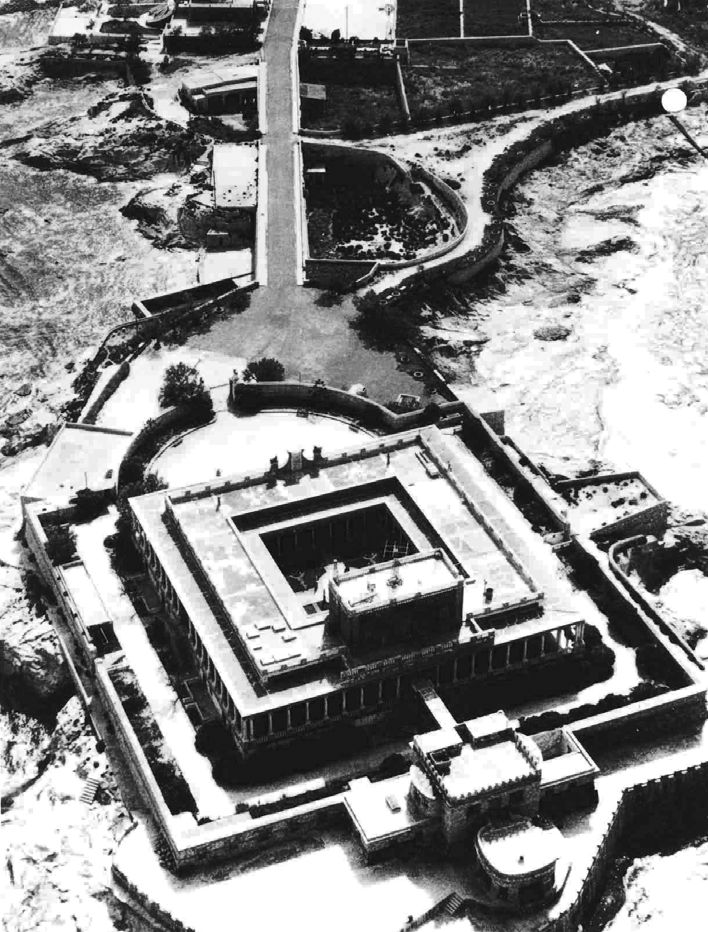
Aerial view showing the square plan and mock fortifications, Scicluna Estates, 1950s.
1820 – 1886
Emmanuele Scicluna, banker and Marquis
Emmanuele’s father Giuseppe set up the first wholly Maltese bank, and the Sciclunas were the first to introduce cheques to Malta. After the deaths of his father and elder brother, Emmanuele inherited the family’s wealth and estates, consolidated its shipping business — his fleet traded as far as the Indian Ocean — and grew the bank into one of the most important of nineteenth-century Malta.
In 1875 Pope Pius IX made him a Marquis in recognition of the bank’s assistance to the Holy See. He chose the motto Nobile Virtutis Meritum, and in 1885 he was elected president of the Chamber of Commerce, a post he held until his death the following year.
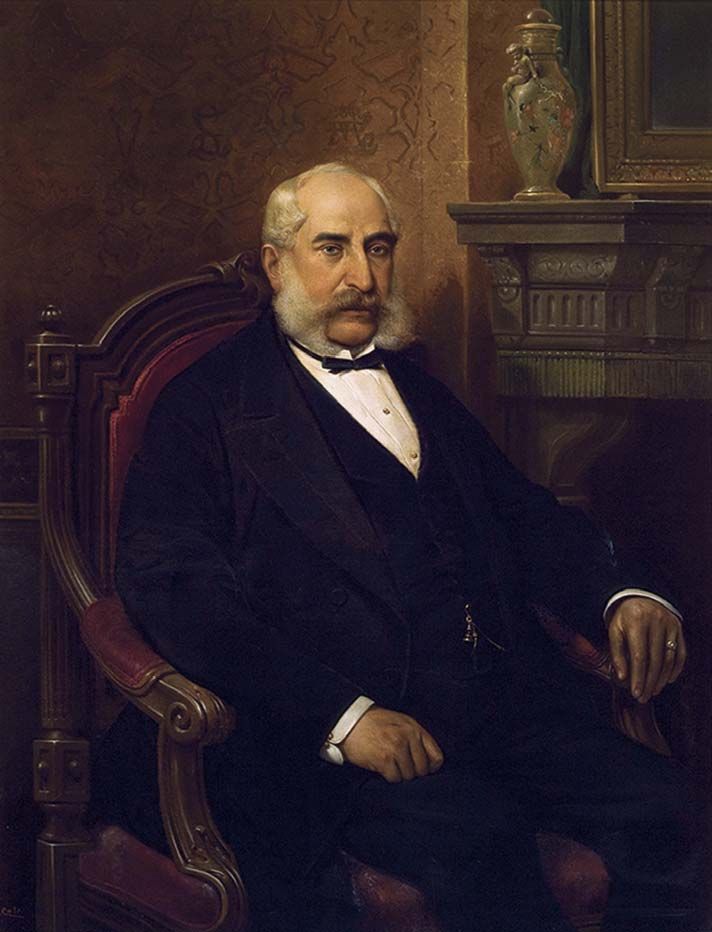
Giuseppe Calì, portrait of the Marquis Emmanuele Scicluna, The Chamber of Commerce Gallery, Valletta.
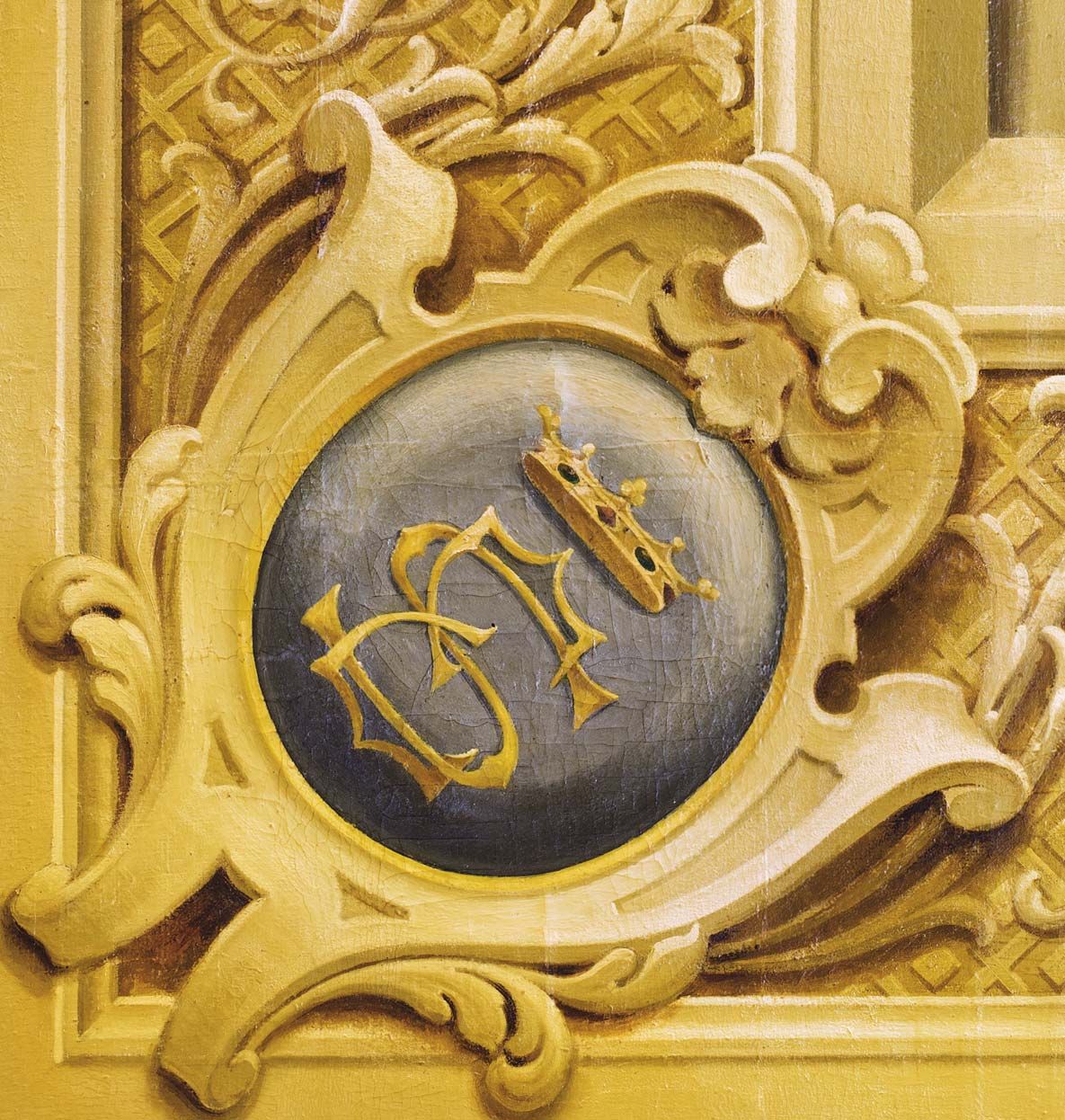
Emmanuele Scicluna’s insignia in the decoration of the Yellow Room.
1870s
A romantic folly in the classical style
Visitors arrived through a monumental gate inscribed Deus nobis haec otia fecit — “God made this gem for us” — and followed a long avenue through formal gardens to a curving exedra. There, a fountain of Neptune stood before a double staircase rising to the main door.
The palace itself is a square within a square: main rooms on a single piano nobile around a central courtyard, wrapped in a colonnade of 76 Ionic columns and raised on a podium so it reads as one storey from land and sea. High perimeter walls give the impression of the inner keep of a fortress. Greek-inspired architecture, Egyptian caryatids at the door and seventeenth-century-style bastions make it a showpiece of the Eclectic taste of the period. Its architect is unknown; the closest comparison is Giuseppe Bonavia’s La Borsa in Valletta — where Scicluna was president.
Deus nobis haec otia fecit
Inscription over the entrance arch
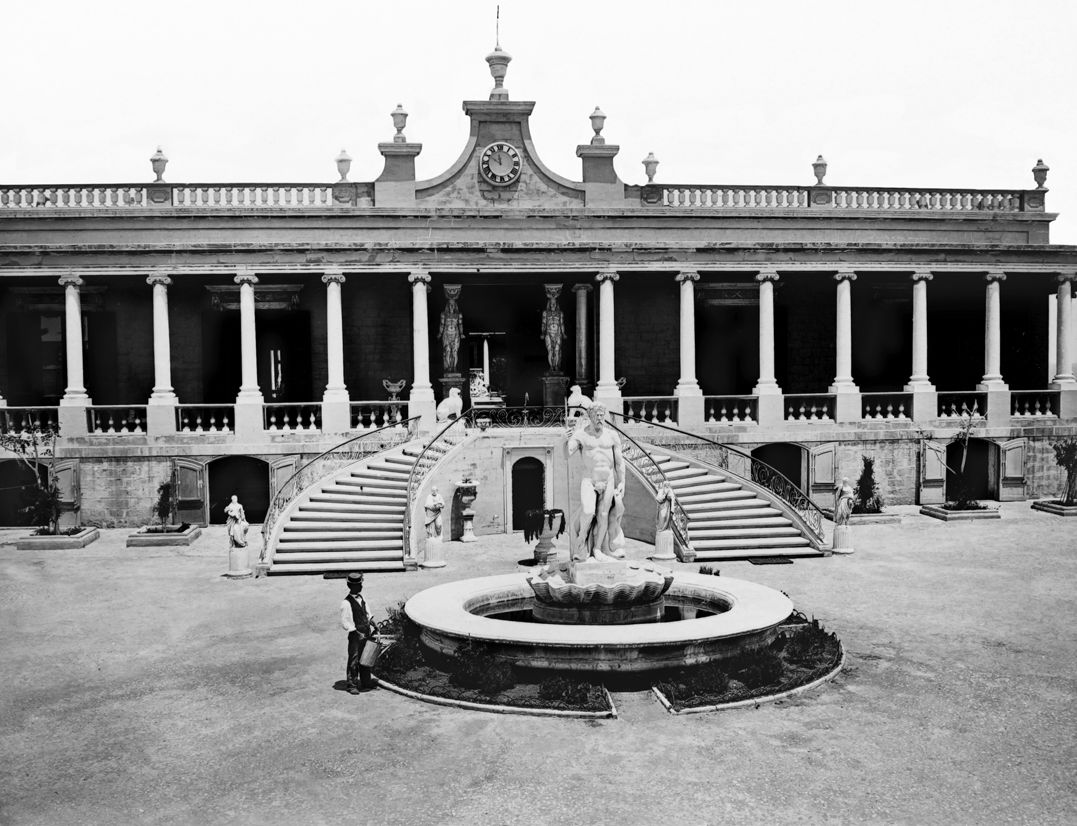
The original façade with the statue of Neptune and clock ensemble, Richard Ellis Archives Malta, c. 1880s.
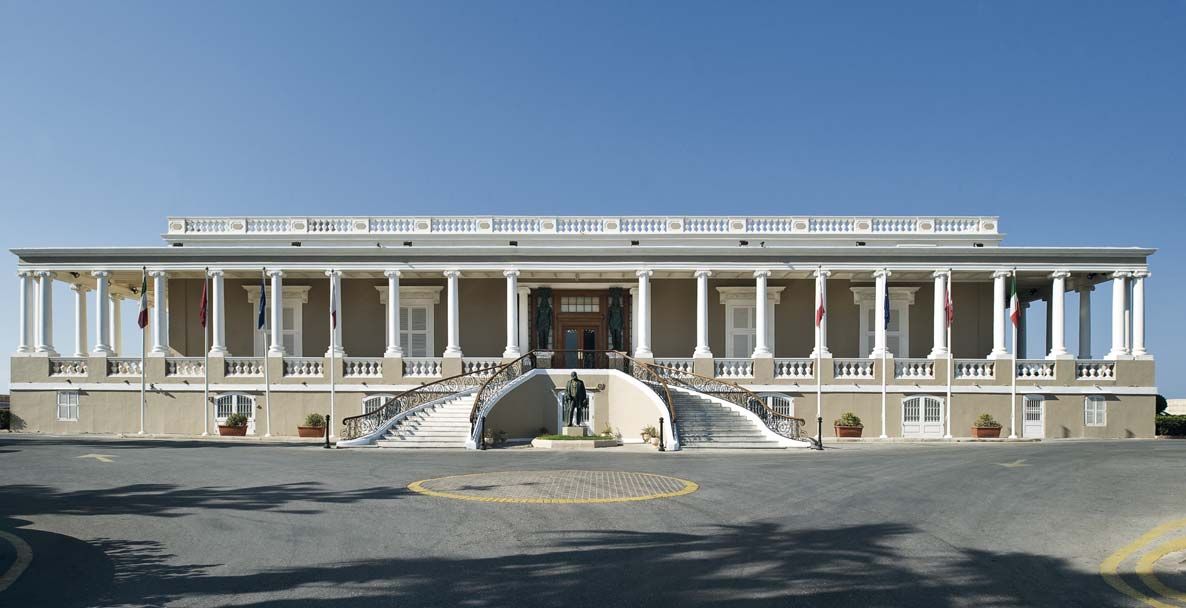
The façade today.
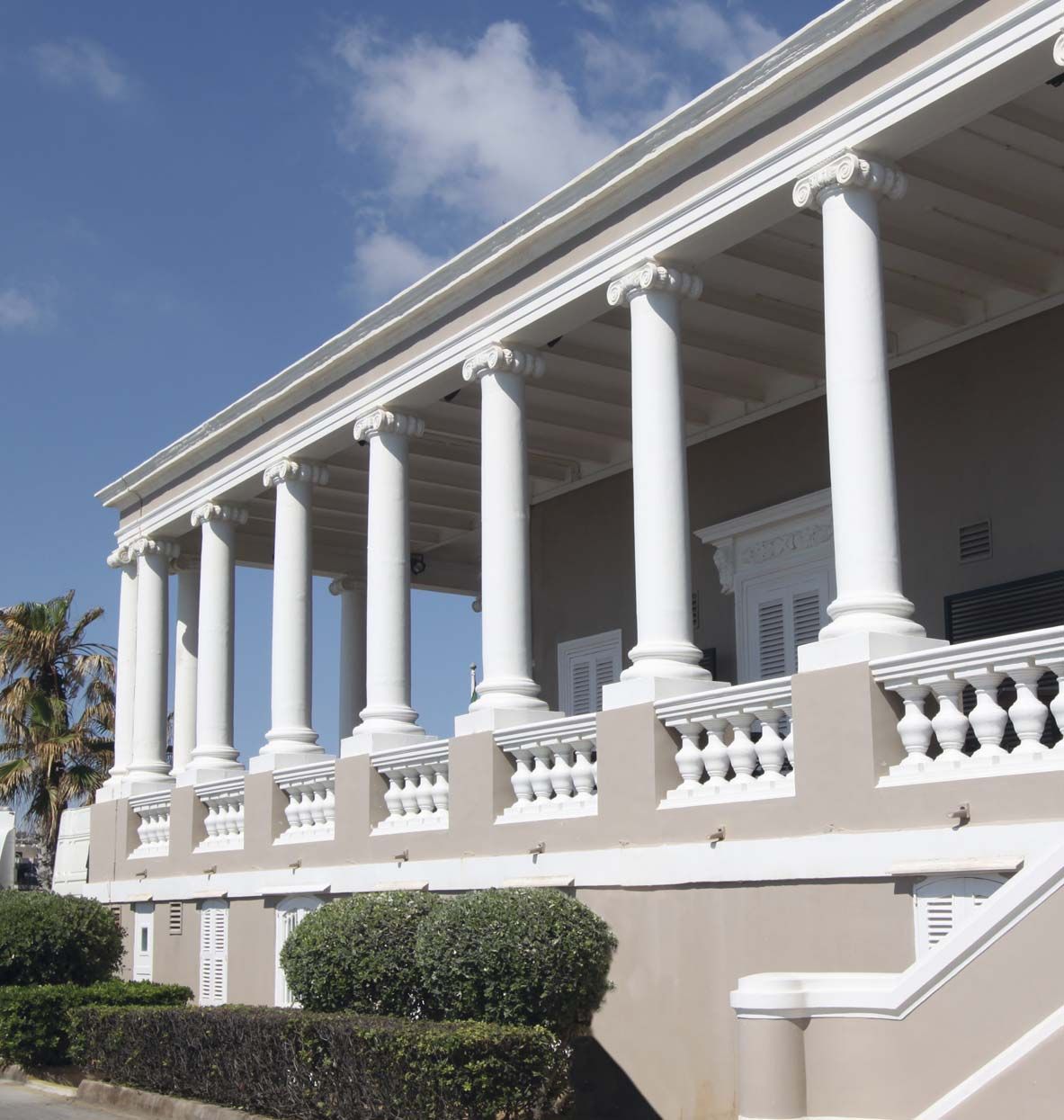
Part of the colonnade, with the original window mouldings.
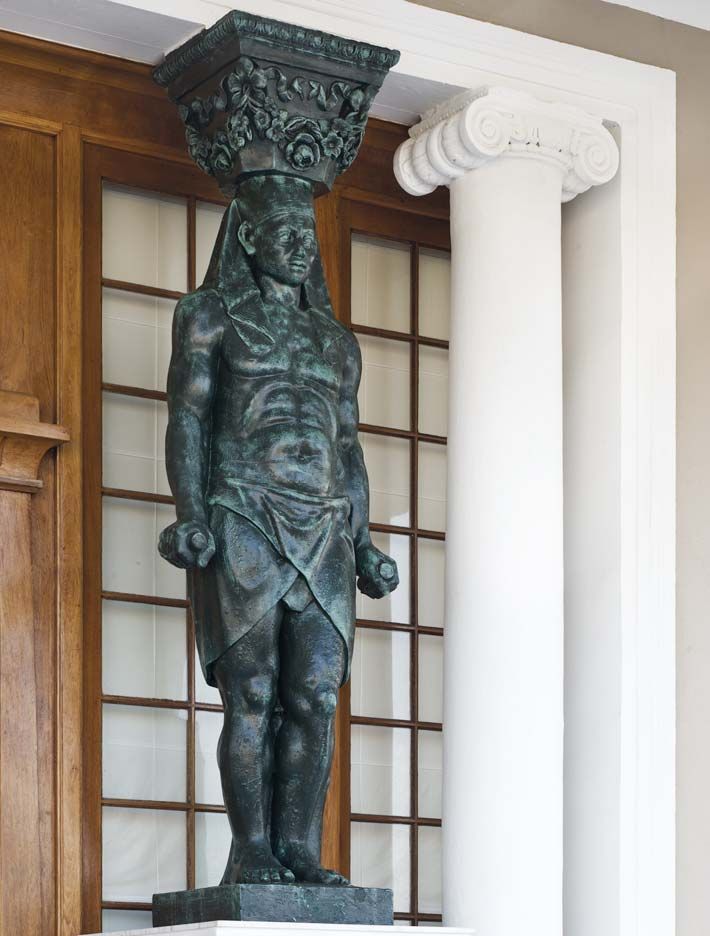
One of the Egyptian caryatids flanking the main doorway.
Late 19th century
Ceilings that tell a merchant’s story
No expense was spared inside: marble floors, lustres, carvings, gilt and painted decoration. The two halls either side of the entrance were painted by the Maltese scenographer Vincenzo Maria Cremona (1851–1912), whose signature is still legible in the Yellow Room. Its symbols of Mercury and Neptune — commerce and the sea — embody the Marquis’ business. The richer Green Room carries an allegory of Industry, suggesting it was where deals were closed.
In the back wing, the former Ballroom keeps its Belle Époque ceiling: one of the most remarkable fusions of stucco, stained glass and carpentry on the island, with sculptural work attributed to Giulio Moschetti.
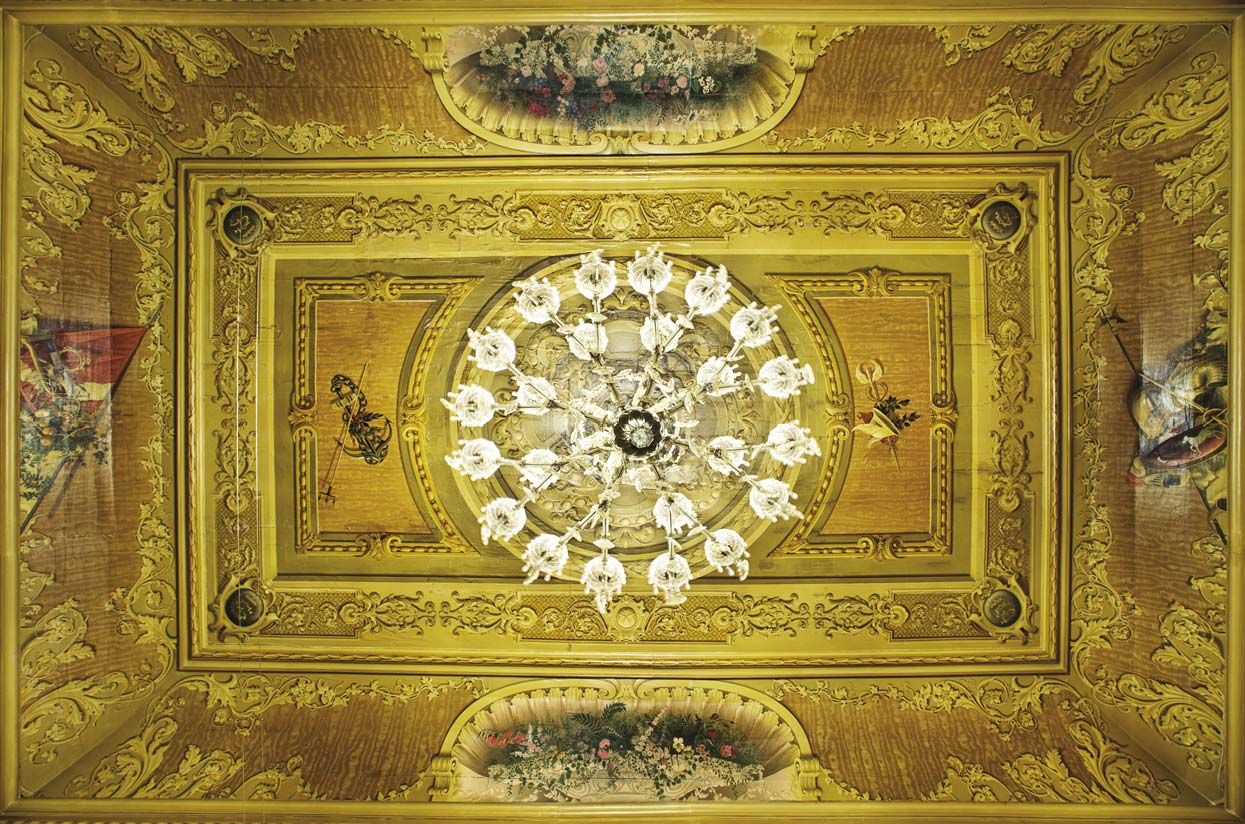
The Yellow Room ceiling.
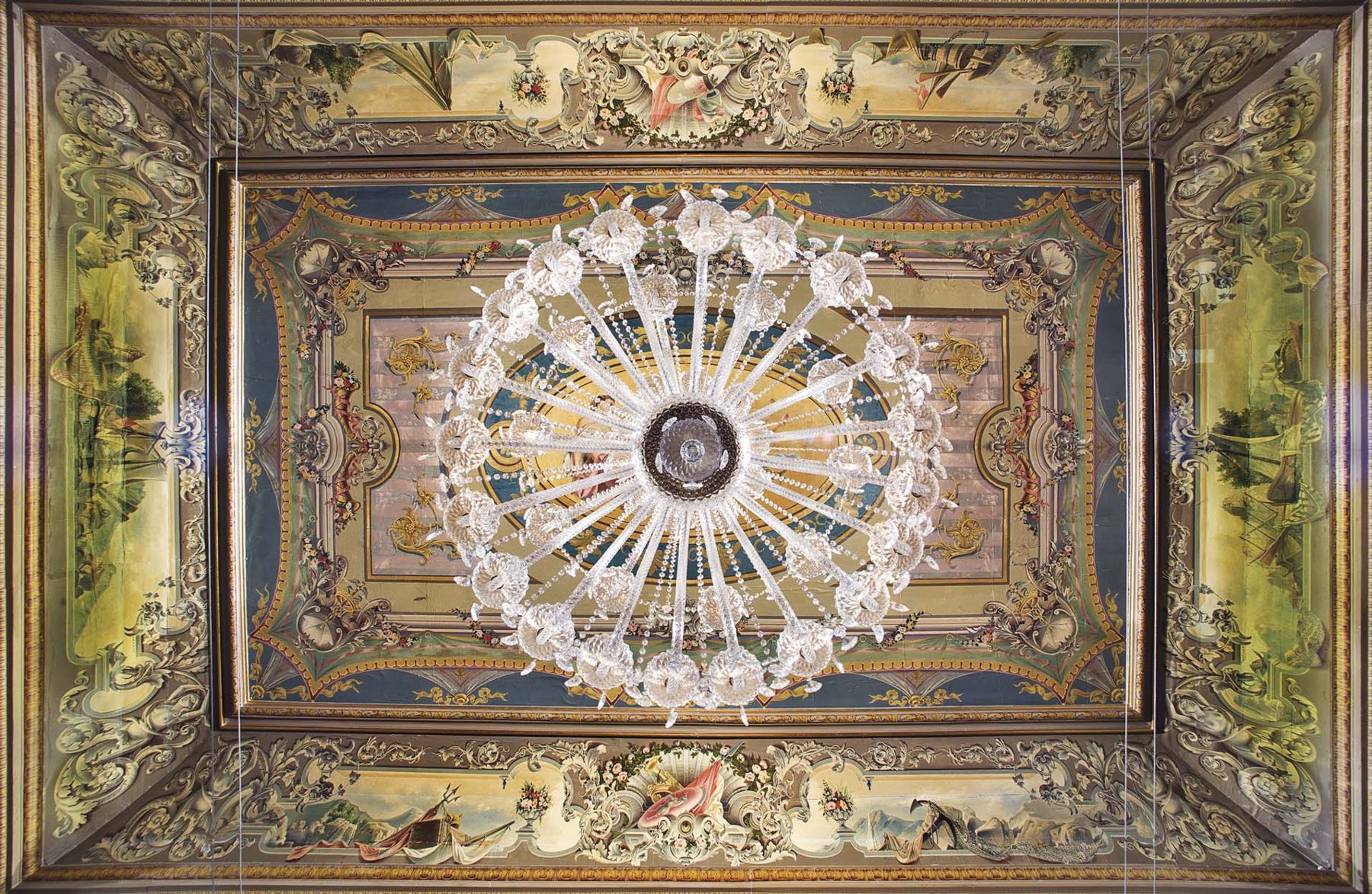
The Green Room ceiling.
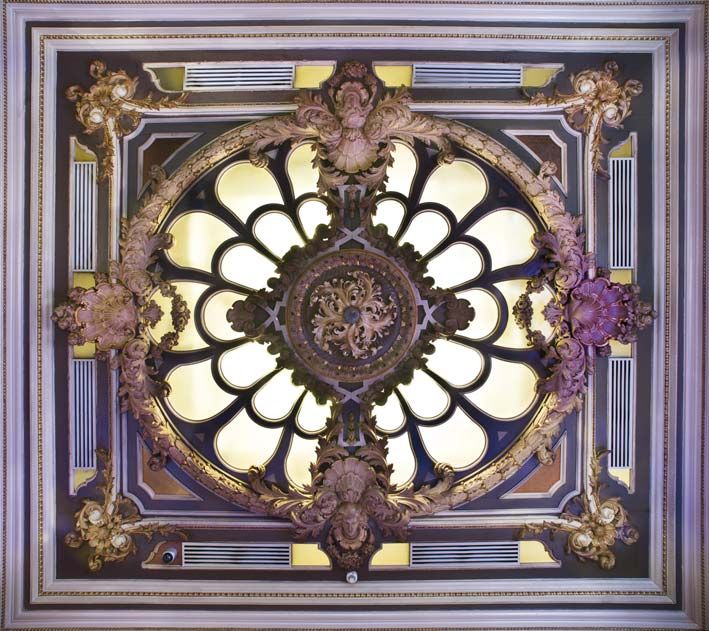
The former Ballroom ceiling.
1886 – 1963
Hospital, salon and refuge
Emmanuele lived here with his wife Margaret Louise until his death in 1886. With no children, the palace passed to his nephew Giuseppe, who was busy building his own grand residence, Palazzo Parisio in Naxxar.
During the First World War, Giuseppe’s widow Corinna placed the palace at the British Government’s disposal as an officers’ hospital after the Dardanelles campaign. Their son, the Marquis John, married Violetta Testaferrata Moroni Viani in 1921, and the palace became a centre of cultural life — dances, balls, high teas, concerts, and recitals by Violetta at the piano.
In the Second World War John repeated his mother’s gesture and opened the palace to families affected by the war. In 1942 he noted around a hundred people sheltering here.
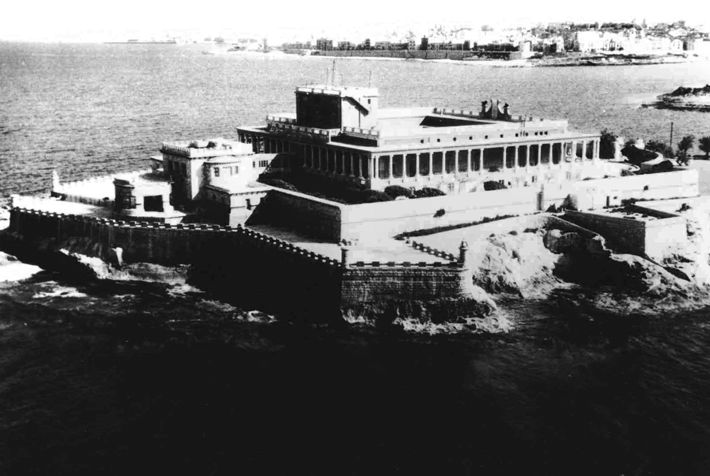
The palace from the sea, showing the projections of the mock fortifications, Scicluna Estates, 1950s.
1964 – Today
Malta’s first casino
In 1963 the family leased the palace to the Kursaal Company Limited, and on 15 July 1964 the Dragonara Casino opened its doors. The exterior became an icon of Malta’s growing tourist industry and of St Julian’s as its hub.
Lease
The Scicluna family lease the palace and grounds to the Kursaal Company Limited.
Opening night
The Dragonara Casino opens on 15 July 1964 — the first in Malta. The courtyard is roofed over and the clock ensemble removed from the façade.
Casino de Malte
The Government takes over the property rights and grants operations to the Mediterranean Casino Company, which trades for a few months as ‘Casino de Malte’.
State operation
The Government runs the casino, followed in 1987 by the state-owned Casma Limited.
Accor & Barrière
Operation is awarded to the French group Accor, later acquired by Barrière, who run the casino until 2010.
Dragonara Gaming Limited
DGL — Peninsula Gaming Group and Novomatic AG — takes over operation and management.
Fully Maltese
Peninsula exercises a buy-out option in November 2012, becoming the first fully Maltese-owned operator of the Dragonara.
Since 2010
Preserving the past, investing in the future
Parts of the peninsula — notably the 1960s extension and the mock fortifications — were neglected between the 1980s and 2010. Dragonara Gaming Limited has made their restoration a priority, with a master plan covering the palace, the fortifications, the exedra and the grounds along the whole promontory.
The aim is simple: to give back to the property the splendour the Marquis intended, as custodian of one of Malta’s most prestigious architectural landmarks.
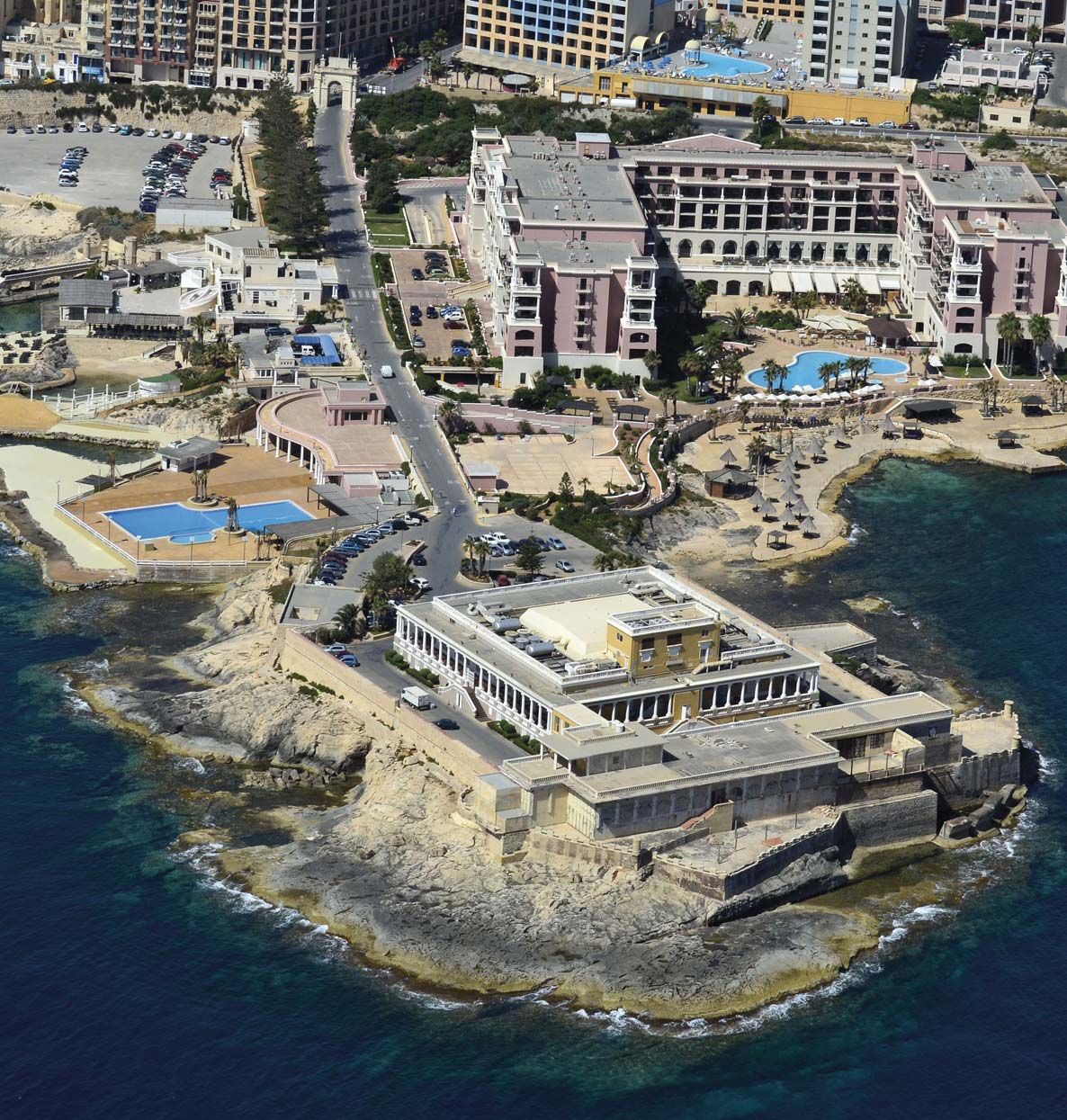
The Dragonara peninsula today.